
GATE Trains Sofia Municipality Experts on Data Spaces within DataTwin Project
On April 30, 2026, the GATE Institute hosted a dedicated training session for representatives of the Sofia City Municipality, focused on the fundamentals and practical applications of data spaces.
5/4/20261 min read
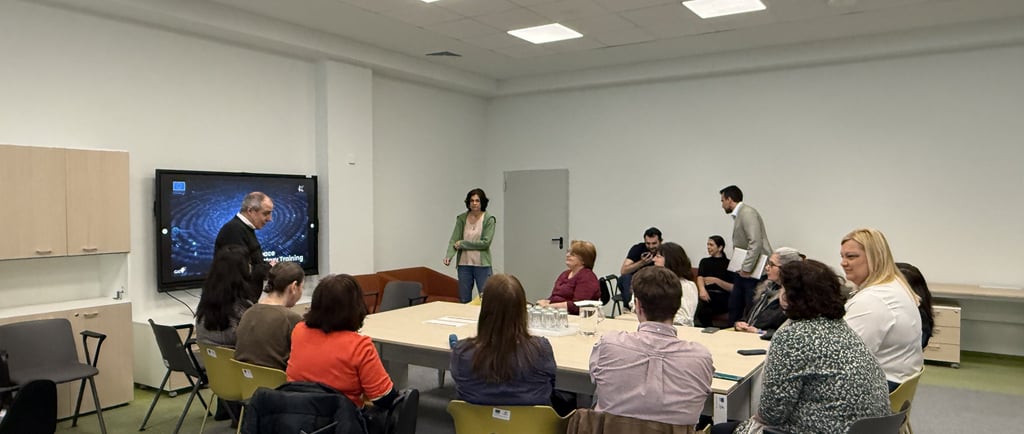
The training was delivered within the framework of the DataTwin project and aimed at strengthening the capacity of public administration to engage with emerging data-driven ecosystems.
The session brought together municipal experts to explore how data spaces can support more efficient, transparent, and data-driven public services. Opening the training, GATE experts introduced the objectives of the DataTwin project and outlined the growing importance of data spaces for urban governance and innovation.
The programme provided a comprehensive overview of the technical concept of data spaces, including their core components, architecture, and key characteristics. Participants were introduced to the building blocks of data spaces, their operational models, and the main principles behind secure and interoperable data sharing across organizations.
A dedicated session focused on real-world applications and best practices, highlighting both the opportunities and challenges associated with implementing data spaces. Examples of established European initiatives—such as Catena-X, the European Health Data Space (EHDS), and the European Mobility Data Space (EMDS)—illustrated how cross-sector collaboration can unlock value from shared data.
The training also included a live demonstration of GATE’s data space environment, showcasing how key components such as data connectors operate in practice to enable secure data exchange between stakeholders.
The session concluded with a discussion on next steps and opportunities for collaboration, reinforcing the role of public institutions as key participants in data ecosystems.
By equipping representatives of Sofia Municipality with practical knowledge and hands-on insights, the training contributes to the broader goals of the DataTwin project—supporting the development of AI-ready urban environments and fostering stronger collaboration between the public sector, research institutions, and industry.